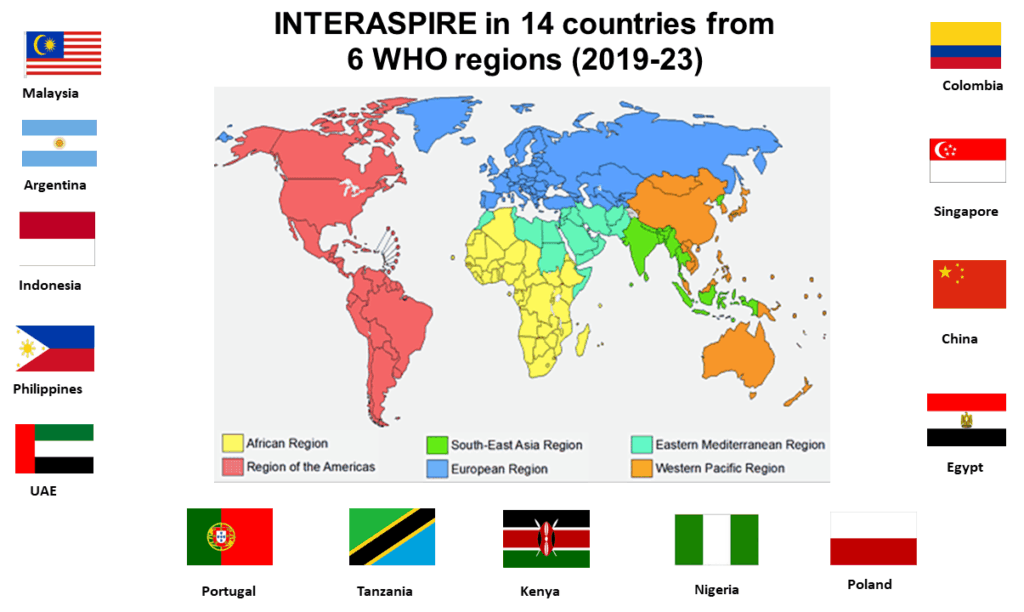
This international survey was conducted in partnership with the World Heart Federation and other international and continental societies through National Societies of Cardiology in 14 countries from each of the six WHO regions with the overall aim of providing an objective assessment of clinical implementation of preventive care by comparison with the lifestyle, risk factor and therapeutic targets defined in international and national guidelines on CVD prevention. INTERASPIRE included in depth clinical and laboratory studies of (i) dysglycaemia and diabetes; (ii) chronic kidney disease; (iii) atrial fibrillation; (iv) familial hypercholesterolaemia; and (v) heart failure
In selected geographical regions within each country, and selected public hospitals, a consecutive sample of patients (>18 years and < 80 years) admitted with CHD was identified retrospectively and information on their management recorded from their medical records including drugs on discharge.
Patients were then interviewed and examined at least 6 months but not later than 2 years (3 years in Africa) after their index hospital admission. Lifestyle was assessed together with standardised measurements of breath carbon monoxide, height, weight, abdominal circumference, and blood pressure. Central laboratory analysis (THL Helsinki, Finland) of fasting lipids (total cholesterol, HDL-cholesterol and triglycerides), fasting glucose, HbA1c, creatinine and cardiovascular biomarkers was undertaken. Patients without a self-reported diagnosis of diabetes mellitus all had an oral glucose tolerance test, with glucose measured, together with urinary albumin/creatinine ratio, in local laboratories in all patients.
This international survey provides a unique picture of the current status of secondary prevention provided to CHD patients in all WHO regions, including their cardio-metabolic, renal and biomarker status. It will investigate determinants of variation in preventive cardiology practice between regions and provide evidence for National Societies to promote, and where necessary improve, the principles of best preventive cardiology practice.

The following National Societies were recruited to the study:
Data Management Centres:
EURObservational Research Programme (EORP), European Society of Cardiology, France
Céline Arsac, MSc., PMP – EORP Team Manager
Clara Berlé – Clinical Project Manager
AIMES Management Services Limited, Liverpool, UK
Richard Spragg – Technical Director
Matt Sullivan – Data Manager
Statistical Centre – Faculty of Medicine and Health Sciences, Ghent University, Belgium
Professor Dirk De Bacquer
Central Laboratory – The National Institute for Health and Welfare (THL), Department of government Services, Forensic Toxicology Unit, Helsinki, Finland
Iris Erlund, Research Manager
Terhi Vihervaara and Elina Jarvensivu – Interaspire Leads
Diabetes Centre – Cardiology Unit, Department of Medicine Solna, Karolinska Institutet,
Stockholm, Sweden,
Professor Lars Ryden
Interaspire Publications






As part of the INTERASPIRE survey a nested sub-study of Lipoprotein (a) [Lp(a)] was conducted in 7 selected countries (China, Colombia, Kenya, Malaysia, Nigeria, Poland, United Arab Emirates) from each of the six WHO regions.
The patient survey was conducted in two groups: (i) Patients with normal Lp(a) [< 50 mg/dl (<115 nmol/l)] who are not informed of their result; and (ii) Patients with elevated Lp(a) [> or equal to 50 mg/dl (> or equal to 115 nmol/l)] who are informed of their result and advised to take medical advice.
The overall objective of the study is to assess knowledge and perception of overall cardiovascular risk in patients with ASCVD and the role of Lp(a), perceived burden and willingness to change behaviour.
All patients with elevated Lp(a) were informed by letter that they have an elevated level of Lp(a), together with an information leaflet on what this result means, and a recommendation to consult their physician for advice. In parallel, a random sub-sample of 80 patients with normal Lp(a) were identified but not informed of their Lp(a) result as it is normal and therefore no action is required
Both groups were invited to complete administered questionnaires to determine patient knowledge and perceptions and management of cardiovascular risk in the context of an elevated Lp(a).
The specific objectives for the physician survey are to gain an understanding of their level of knowledge, opinions on testing and providing patients with information about Lp(a), and their Interest in forthcoming targeted Lp(a) therapies.
A sample of 30 physicians (5 general hospital physicians, 20 cardiologists and 5 lipid specialists) were identified from the group of INTERASPIRE participating hospitals, or other hospitals as required, and invited to complete a telephone administered questionnaire.
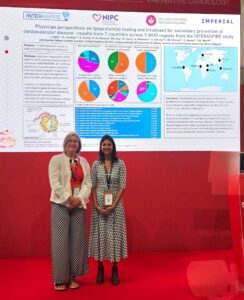
Results of these surveys were presented at ESC Congress Madrid 2025.
Lp(a) Publications Patient Perspective Lp(a) Poster Physician Perspective Lp(a) Poster